
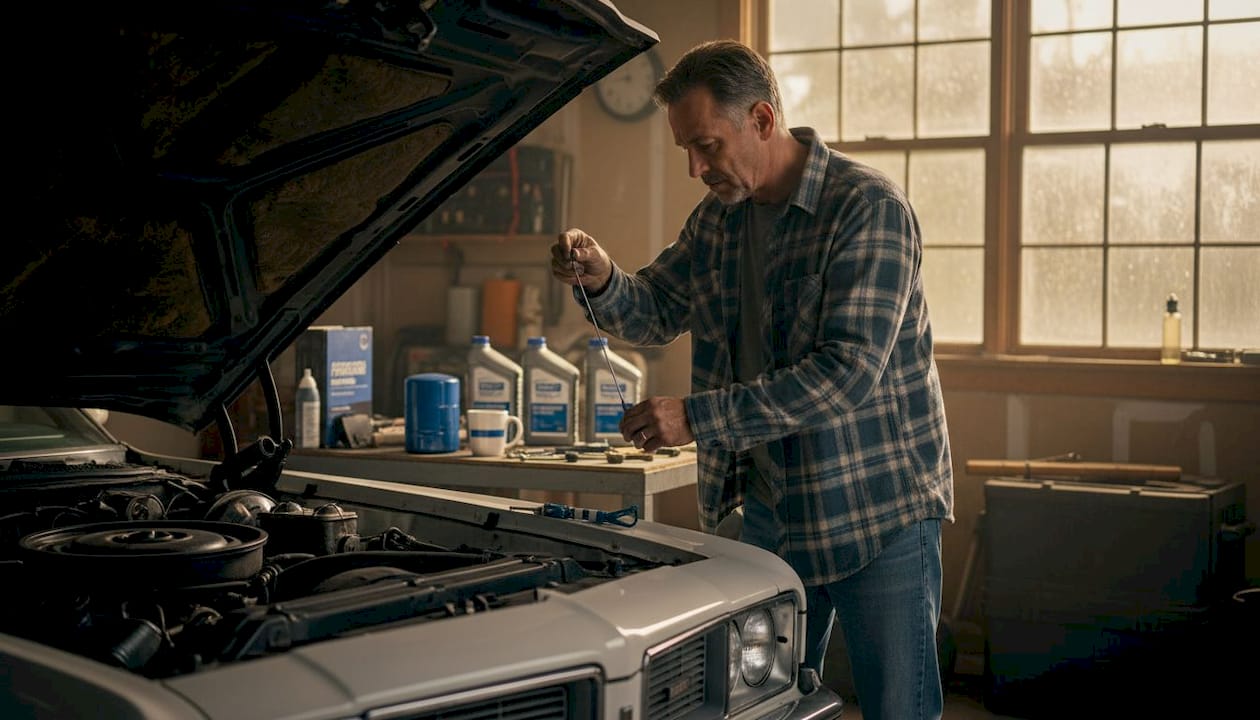
Your classic Oldsmobile represents decades of engineering tradition, and a botched oil change can undo that legacy faster than any amount of neglect. We’ve seen it happen. Owners who’ve spent years and real money preserving a Rocket V8 strip a drain plug thread or run the wrong oil and watch their camshaft lobes disappear in a matter of miles. The vintage oil maintenance workflow used by experienced classic car handlers covers warming the engine, proper draining, filter replacement, careful refill, and a thorough leak check. Follow it, and you protect every dollar invested in that engine.
Key Takeaways
| Point | Details |
|---|---|
| Right oil matters | Classic Oldsmobile engines need high-zinc or straight-grade oil for optimal protection. |
| Follow a reliable workflow | Warming the engine, draining, changing the filter, and careful refilling prevent costly mistakes. |
| Check, don’t guess | Always check for leaks and monitor oil condition instead of relying solely on mileage. |
| Avoid over-tightening | Hand-tighten your drain plug and filter to avoid thread damage. |
| Know your engine’s cues | Your Oldsmobile’s oil change needs are about attention and observation as much as following the manual. |
What you need: Tools and materials for Oldsmobile oil maintenance
With the stakes this clear, it’s essential to gather the right equipment and supplies before you turn a single wrench.
The difference between a clean, problem-free oil change and a frustrating afternoon of spills and stripped hardware almost always comes down to preparation. You need the right tools, the right oil, and the right filter for your specific Oldsmobile. Generic parts store assumptions won’t cut it.
Tools and safety gear you need:
- Drain pan with at least a 6-quart capacity
- Adjustable wrench and a proper filter wrench (strap or cap style)
- Torque wrench for the drain plug
- Floor jack and rated jack stands (never work under a car supported only by a floor jack)
- Nitrile gloves and safety glasses
- Shop rags and absorbent pads for spills
- Funnel for clean oil entry
- Flashlight or work light to inspect the undercarriage
Beyond the tools, the oil itself is where Oldsmobile owners need to think harder than they would for a modern car. Vintage Oldsmobile V8 engines, including the celebrated Rocket series and the Gen 1 and Gen 2 platforms, require specific oil viscosity matched to the owner’s manual. Historically, many of these engines ran non-detergent or straight-grade oil. Today, the critical requirement is high-zinc oil, specifically formulated to protect the flat-tappet camshafts in these engines. Modern API SN or SP oils have stripped out most of the zinc dialkyldithiophosphate (ZDDP) that these old flat-tappet cam designs depend on. Running a standard modern oil in a Rocket V8 is a slow death sentence for your cam lobes.
Classic oil vs. modern oil: what matters for your Oldsmobile
| Feature | Classic/straight-grade oil | Modern high-zinc oil |
|---|---|---|
| ZDDP (zinc) content | Often higher naturally | Specifically formulated high |
| Detergent level | Low or non-detergent | Moderate to high |
| Flat-tappet cam protection | Good when fresh | Excellent with correct additive |
| Availability | Limited, specialty sources | Widely available |
| Recommended for daily drivers | No | Yes |
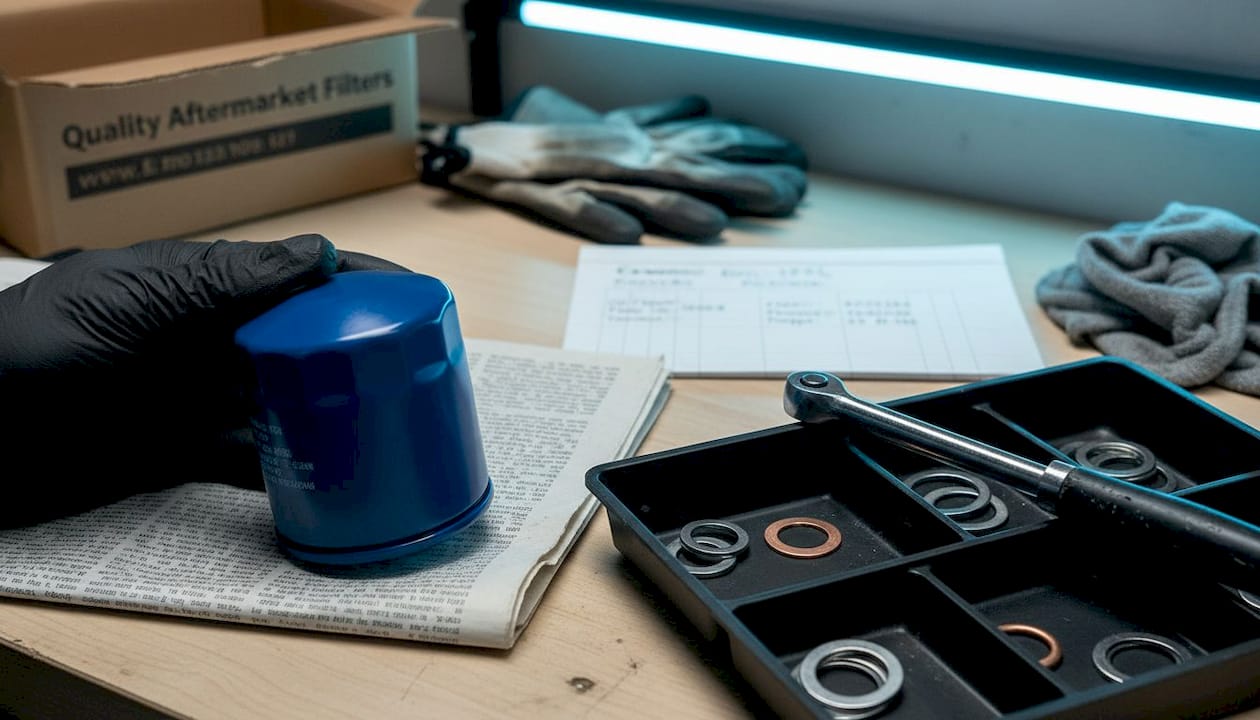
For filter selection, use an OEM-spec or quality aftermarket filter rated for your engine’s oil volume and pressure. Always buy a filter with a quality anti-drainback valve to prevent dry starts. Make sure the gasket material is compatible and that you have a replacement crush washer if your Oldsmobile model uses one at the drain plug.
For model-specific guidance, check the best motor oil for Oldsmobile 98 to match your application before you buy.
Pro Tip: Before you start, lay every tool and part out on a clean workbench. Confirm you have the correct oil quantity and grade, the right filter, a new drain plug washer if needed, and all your safety gear. Starting without something means stopping mid-job with oil draining into a pan.
Step-by-step workflow: Changing oil on vintage Oldsmobiles
Once your gear is assembled, you’re ready to follow the hands-on workflow for a reliable Oldsmobile oil change.
The full process follows proven vintage engine practices that apply directly to Oldsmobile classics. Don’t skip steps and don’t rush.
-
Warm up the engine. Run the engine for 5 to 10 minutes until it reaches normal operating temperature. Warm oil flows faster and carries more suspended contaminants out with it. Turn it off and wait 10 minutes before going underneath. This is not negotiable from a safety standpoint.
-
Raise and secure the vehicle. Jack the car up and place it on rated jack stands at the correct frame points. Never crawl under a vehicle on a floor jack alone. Confirm the car is stable before you commit your upper body to the undercarriage.
-
Drain the old oil. Position your drain pan under the drain plug. Remove the plug slowly and carefully with the correct wrench. Let the oil drain fully, which typically takes 5 to 10 minutes. Don’t rush this step. Tilting the car slightly nose-up by raising the front higher gives a more complete drain.
-
Remove the old oil filter. Use a strap or cap-style filter wrench to break the old filter loose. Expect some residual oil to spill, so keep that drain pan positioned. Inspect the engine block to make sure the old filter gasket came off with the filter. A doubled gasket is one of the most common causes of an immediate oil leak after a change.
-
Install the new filter. Dip your finger in fresh oil and coat the new filter’s rubber gasket completely around the perimeter. This ensures a proper seal and makes the next removal easier. Tighten the filter hand-tight, then give it a three-quarter turn. No filter wrench needed for installation. Avoid over-tightening the drain plug or filter at any stage of this process, as damaged threads on a vintage oil pan can mean an expensive repair.
-
Reinstall the drain plug. Install a new crush washer if your model requires one. Hand-tighten the plug, then torque it to specification using your torque wrench. Refer to the factory service manual for the exact torque value.
-
Refill with correct oil. Most Oldsmobile V8 engines take 5 to 6 quarts of oil with a filter change. Add oil slowly through the fill cap using a funnel, stopping at 4.5 quarts and then checking the dipstick before adding the last half quart. This prevents overfilling, which is just as damaging as underfilling.
-
Start the engine and inspect. Start the engine and let it idle for 2 to 3 minutes. Watch the oil pressure gauge or idiot light immediately. If pressure doesn’t register within 10 seconds, shut it off and investigate. After pressure confirms, walk around and look under the car for any drips. Shut the engine off, wait 5 minutes, and recheck the dipstick.
Safety reminder: Oil that’s been running at operating temperature can exceed 200°F. Even after 10 minutes of cooling, contact with draining oil can cause a serious burn. Always wear gloves and keep your face and arms clear of the drain path.
Quick reference: Oldsmobile V8 oil change data
| Engine family | Typical oil capacity | Common viscosity (owner’s manual) | Filter change |
|---|---|---|---|
| Rocket 303/324 cu in | 5 quarts | 10W-30 or 20W-50 | Every change |
| 400/425/455 cu in | 5-6 quarts | 10W-40 or 20W-50 | Every change |
| 307/350 cu in | 5 quarts | 10W-30 | Every change |
For a broader look at the full classic car DIY oil guide process and how it applies to various platforms, that resource is worth bookmarking.
Pro Tip: Always use a new crush washer if your model requires one. Reusing an old crush washer is a false economy. A $0.50 washer prevents a dripping drain plug that costs you much more in cleanup and frustration.
Common mistakes and troubleshooting
Even seasoned DIYers can run into classic mistakes. Here’s how to avoid or fix them before they damage your engine or your patience.
The most common mistakes Oldsmobile owners make:
- Over-tightening the drain plug or filter. This is the fastest route to a stripped drain plug hole in a vintage aluminum or cast iron oil pan. These pans are irreplaceable or expensive to repair. The rule is simple: snug with a wrench, not cranked with all your force.
- Using the wrong oil. Modern API-rated oils designed for current engines have dramatically reduced ZDDP levels compared to oils from the 1970s and 1980s. Your flat-tappet cam needs that zinc and phosphorus for anti-wear protection. Using a standard modern oil without a ZDDP additive or choosing a dedicated high-zinc formulation is a mistake that shows up as accelerated cam lobe wear over thousands of miles.
- Failing to check for the doubled filter gasket. We mentioned it above, and we’ll say it again. A doubled gasket will blow out and dump your fresh oil on the driveway within minutes. Always look.
- Underfilling or overfilling. Both hurt your engine. Underfilling starves bearings of oil at high demand moments. Overfilling causes foaming when the crankshaft contacts oil, reducing film strength (the oil’s ability to maintain a protective layer between metal surfaces) and increasing wear.
- Skipping the post-start inspection. You’ve done all the work. Take 3 minutes to actually verify there are no leaks. Oil under pressure at operating temperature will find any gap you left.
Consider this: A stripped oil pan thread on a vintage Oldsmobile 455 can cost hundreds of dollars to repair properly, and that’s assuming you can even find the right pan. Ten seconds of restraint when tightening that drain plug costs you nothing.
When troubleshooting an unexpected leak after a change, check the filter gasket area first, then the drain plug, then the valve cover and timing cover gaskets that may have been disturbed. For the right oil match for specific Oldsmobile models, the correct oil for Oldsmobile Omega page covers the 2.8L platform in detail.
Pro Tip: Double-check torque specs from the factory service manual before final tightening on both the drain plug and the valve cover bolts if you’ve had them off. A torque wrench is not optional for this job on a vintage engine.
How often should you change oil in a classic Oldsmobile?
Now that you can maintain and troubleshoot your oil change, let’s tackle how often classic Oldsmobile oil should actually be changed.
This is where a lot of owners go wrong, and it’s usually because they apply modern car logic to a vintage engine. Modern vehicles have extended drain intervals backed by full-synthetic oils, bypass filtration, and oil life monitoring systems. Your Oldsmobile has none of that.
General classic car practice shows clearly that condition matters far more than a fixed mileage number. An Oldsmobile that sits in a garage for six months collects moisture in the oil from condensation. That moisture and the resulting acids are just as damaging as miles-driven contamination.
What to watch when deciding on your next change:
- Oil color: Fresh oil is amber. Dark brown is used but acceptable. Black, gritty, or milky oil needs an immediate change.
- Oil smell: A sharp, acrid smell or a faint fuel smell signals contamination. Change it.
- Particles: Shiny metallic flakes in the oil mean metal wear is happening. This needs investigation beyond just a change.
- Time since last change: Even if the car barely moved, change oil that’s a year old. Acids and moisture don’t take a day off.
- Driving conditions: Short trips, stop-and-go, or track use all accelerate oil degradation.
Recommended interval framework:
| Use pattern | Suggested interval |
|---|---|
| Active daily driver | Every 1,500 to 2,000 miles |
| Weekend driver | Every 1,000 miles or 6 months |
| Long-term storage | Change before storing AND after pulling it out |
| Track or high-load use | Every 500 to 1,000 miles |
The smart approach is to pull the dipstick every few weeks, smell and examine the oil, and let its condition guide your decision. For model-specific oil recommendations, the best oil for Oldsmobile 88 guide provides direct guidance for that popular platform.
A fresh perspective: Why the ideal Oldsmobile oil workflow is about feel, not formulas
Here’s something the generic how-to articles won’t tell you. The best Oldsmobile owners we’ve ever talked to don’t set a calendar reminder for their oil change. They listen to their car.
That sounds less technical than it is. What it actually means is this: you learn your Oldsmobile by paying attention over time. You notice what color oil looks like after exactly 1,200 miles in your driving pattern. You know how the engine sounds cold vs. warm when the oil film is fresh and strong. You can smell the difference between clean oil burning off on a hot exhaust manifold and oil that’s turned acidic from extended service.
Rigid formulas are for people who don’t know their machines. Attentive condition monitoring is for people who do. Keep a simple maintenance log in the glovebox. Write down every oil change with the date, mileage, oil brand, and viscosity used. Over three or four changes, you’ll see patterns. You’ll know if your engine uses a quarter quart per 500 miles or if it runs bone dry on consumption.
“The most valuable maintenance tool is your attention. No interval schedule on paper can replace knowing what your specific engine’s oil looks and smells like when it needs to come out.”
That mindset also protects your investment in quality oil. If you’re running a properly formulated high-zinc oil that’s genuinely protecting your flat-tappet cam, you’ll have the confidence to let it run its full useful life rather than changing it out of anxiety at 800 miles. Explore the engine lubrication best practices we’ve put together to build that deeper understanding of what proper lubrication really means for your classic.
Records, attention, and good oil. That’s the formula.
Keep your Oldsmobile running strong with the right oil
You’ve got the workflow, the torque specs mindset, and the condition monitoring habits. Now the only thing left is putting the right oil in the crankcase.
We’ve built out detailed, model-specific oil guides for virtually every classic Oldsmobile platform. Whether you’re working on a full-size 98 or a smaller displacement variant, you’ll find direct recommendations matched to your exact engine. Start with the motor oil for Oldsmobile 98 if you’re running that platform, and check the full library of classic car lubrication tips for everything from viscosity selection to additive strategy. Your Rocket V8 deserves nothing less than purpose-built protection.
Frequently asked questions
What oil viscosity is best for Oldsmobile Rocket V8 engines?
Consult your owner’s manual first, as most Rocket V8 engines require a straight-grade or multi-grade high-zinc formulation, particularly to protect the flat-tappet camshaft design common to these engines.
Are non-detergent oils still required for classic Oldsmobiles?
Most owners of vintage Oldsmobile V8s have moved away from non-detergent oils and now run modern high-zinc formulations that provide superior flat-tappet cam protection without the sludge risk of non-detergent products.
How much oil does a classic Oldsmobile V8 engine hold?
Most Oldsmobile V8 engines, including the 307, 350, 400, and 455 cubic inch variants, hold approximately 5 to 6 quarts with a filter change, but always verify against your specific factory service manual.
What happens if you over-tighten the drain plug or oil filter?
You risk stripping threads or cracking the filter housing. As vintage engine best practices confirm, always tighten the filter by hand plus three-quarters of a turn, and torque the drain plug to factory spec only.
Should I follow mileage or oil condition for changes in my classic Oldsmobile?
Classic car maintenance guidance consistently supports prioritizing oil condition over strict mileage intervals, particularly given storage periods, moisture accumulation, and driving pattern variations that affect oil health independently of mileage.
Recommended
- Motor oil for 1983 Oldsmobile 98 5.0L – The best synthetic oil for vehicle maintenance
- What oil to use in a 1982 Oldsmobile 98 4.1L – The best synthetic oil for vehicle maintenance
- Best oil for 1983 Oldsmobile 88 5.0L – The best synthetic oil for vehicle maintenance
- Motor oil for 1982 Oldsmobile 88 4.3L – The best synthetic oil for vehicle maintenance